Free Shipping / £ 250 Worldwide / £ 50 UK

Bodhi Seed:Origin & Use


What Is Bodhi Seeds?
Bodhi Seed or Bodhichitta, refers to the sacred seed traditionally used for making prayer beads and mala throughout the Himalayan Buddhist world. The name derives from the word bodhi, meaning awakening or enlightenment, and is directly associated with the spiritual awakening of the Buddha.
For centuries, body seeds have been used as the standard material for Buddhist mala, especially within Tibetan Buddhism. While many practitioners may own secondary malas made from turquoise, coral, or other sacred materials, bodhi seed mala remain the primary and most widely used prayer beads, forming the foundation of daily mantra practice.
It is estimated that 90 to 99 percent of Tibetan Buddhist practitioners and monks rely on bodhi mala as their main practice beads.
Here – (Bodhi seed mala)
The Bodhi Tree and the Enlightenment of the Buddha
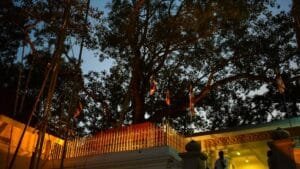
According to Buddhist tradition, Siddhartha Gautama attained enlightenment under the Bodhi Tree, making this tree one of the most sacred living symbols in Buddhism. Because awakening occurred beneath this tree, the seeds associated with it naturally came to symbolise enlightenment itself.
The original Bodhi Tree, located in BodhGaya in India, is believed to still be alive today. Due to its immense age and the weight of its wide, spreading branches, the tree is now supported by metal frames to prevent collapse. It remains a living spiritual monument visited by pilgrims from all Buddhist traditions.
This direct connection between the Bodhi Tree and enlightenment is the reason bodhi mala became, and remain, the default beads of Buddhist practice.
The Bodhi (Body) Tree: Origin of the Body Seed
The body seed comes from the Bodhi Tree, scientifically known as Ficus religiosa, a sacred fig species native to the Indian subcontinent and the Himalayan foothills. The Bodhi Tree thrives in warm subtropical to tropical climates, favouring well-drained soil, seasonal monsoon rainfall, and long exposure to sunlight. Over time, it grows to great size and longevity, developing wide branches and deep roots.
The tree produces small, naturally formed seeds which, once mature and properly dried, become the body seeds used in mala and prayer beads. Because of the Bodhi Tree’s spiritual significance, these seeds came to embody awakening, endurance, and continuity of practice.
While Ficus religiosa grows across India, Tibet, Nepal, and surrounding regions, Nepalese body seeds, often called Bodhichitta, are especially valued. The combination of altitude, climate, and traditional harvesting methods is believed to produce seeds that are denser, better formed, and longer-lasting, making them the most sought after for mala making.
Bodhi seed in Tibetan and Himalayan Buddhist Practice
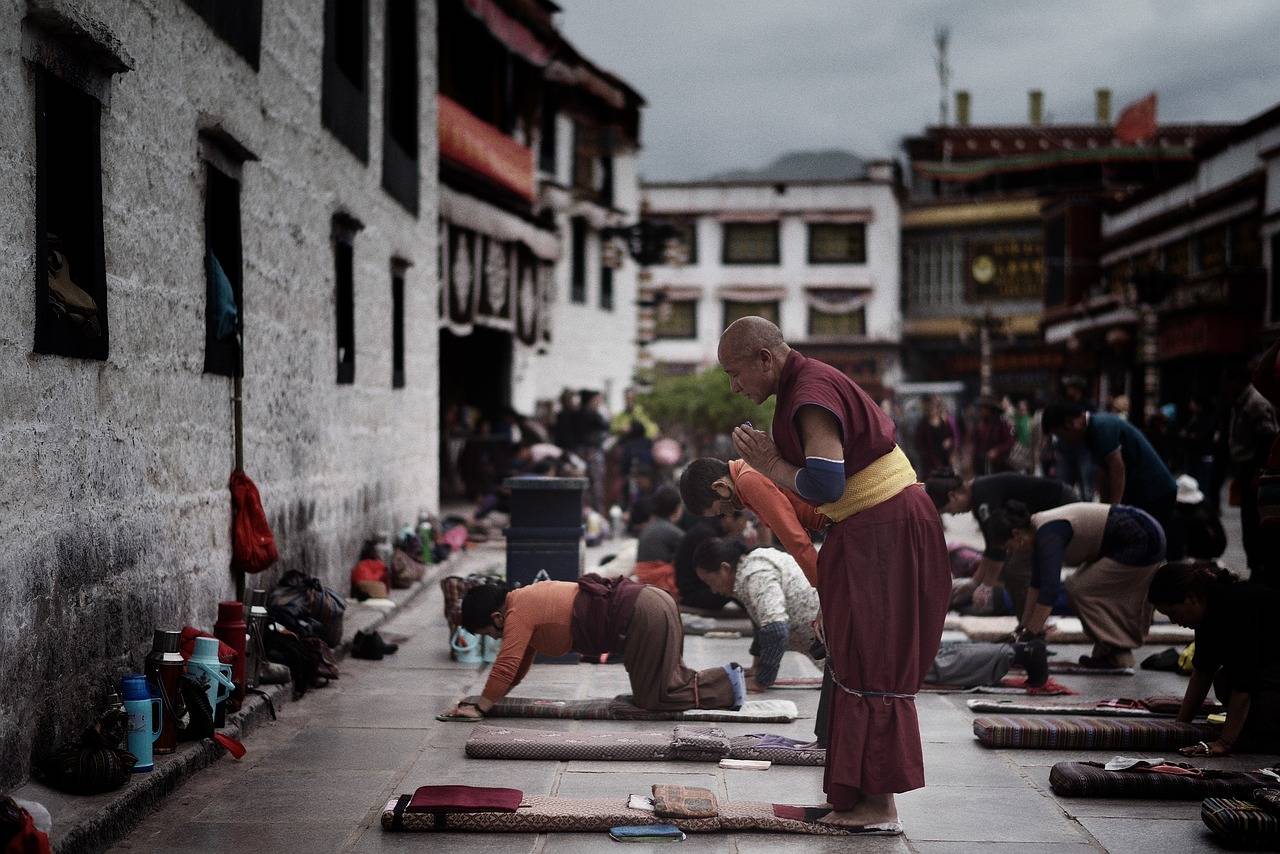
In Tibetan Buddhism, bodhi seed malas are used for daily mantra recitation, counting repetitions during meditation, prostration practice, and long retreats or lifelong devotional use.
Bodhi seed is valued not for ornamentation, but for its neutral and stable spiritual quality. It supports focus rather than distraction, which is why monks, nuns, and serious lay practitioners rely on it as their main prayer beads.
Even when malas made from Tibetan turquoise or Tibetan coral are used for specific intentions or practices, the bodhi seed mala usually remains the primary and most trusted prayer beads set.
Types of Body Seeds and Their Origins
Body seeds used in Tibetan malas come from several regions, including Tibet, India, and Nepal. All of these are traditionally accepted and used by Tibetan monks.
However, Nepalese body seeds are considered the most desirable due to their structure, weight, and longevity. These seeds are commonly referred to as Bodhichitta and are widely preferred by both practitioners and collectors.
Bodhi seed Eyes: Shape, Structure and Natural Formation
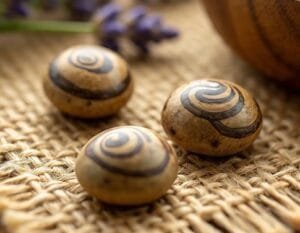
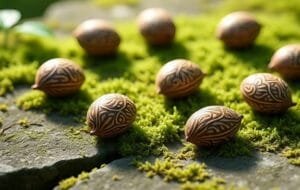
A defining feature of body seeds is their natural segmentation, commonly referred to as eyes. These are the natural lobes or endings formed as the seed grows and are not carved or altered.
Two-eye bodhi seed has an elongated form with two distinct ends. Three- or four-eye bodhi seed is less common. Five-eye bodhi seed has a star-shaped formation and is especially valued. All eye variations are authentic and traditionally used in Tibetan practice.
Sizes of Body Seeds Used in Bodhi Mala
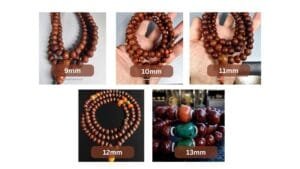
Body seeds used in mala range in size from approximately 7mm to 15mm.
Beads measuring 7 to 8mm are extremely rare. 9mm beads are considered rare. Sizes between 11mm and 13mm are the most common and traditionally preferred. Beads measuring 14 to 15mm are larger and result in heavier prayer strings.
The most widely available sizes are between 11mm and 13mm, offering an balance of comfort, durability, and tactile presence for daily practice.
Why Bodhi seed Became the Standard Mala Material
Bodhi seed mala became the standard not because of decoration, but because of their direct connection to the Buddha’s enlightenment, their neutral and stable spiritual quality, their suitability for long-term daily use, and their acceptance across all Buddhist schools.
While bodhi seed is most commonly encountered in mala, its spiritual significance exists independently of any particular form.
Bodhi seed Compared to Other Sacred Mala Materials
While bodhi seed forms the foundation of Buddhist mala practice, other sacred materials such as turquoise and coral are also used for specific intentions and traditions. Even so, bodhi seed remains the baseline mala, often complemented but rarely replaced by other materials.
Find out more about :- Tibetan Turquoise Malas
Bodhi seed in Mala and Prayer Beads
Bodhi seed is most commonly used in 108-bead mala prayer beads, reflecting a sacred number deeply embedded in Buddhist cosmology and practice.