
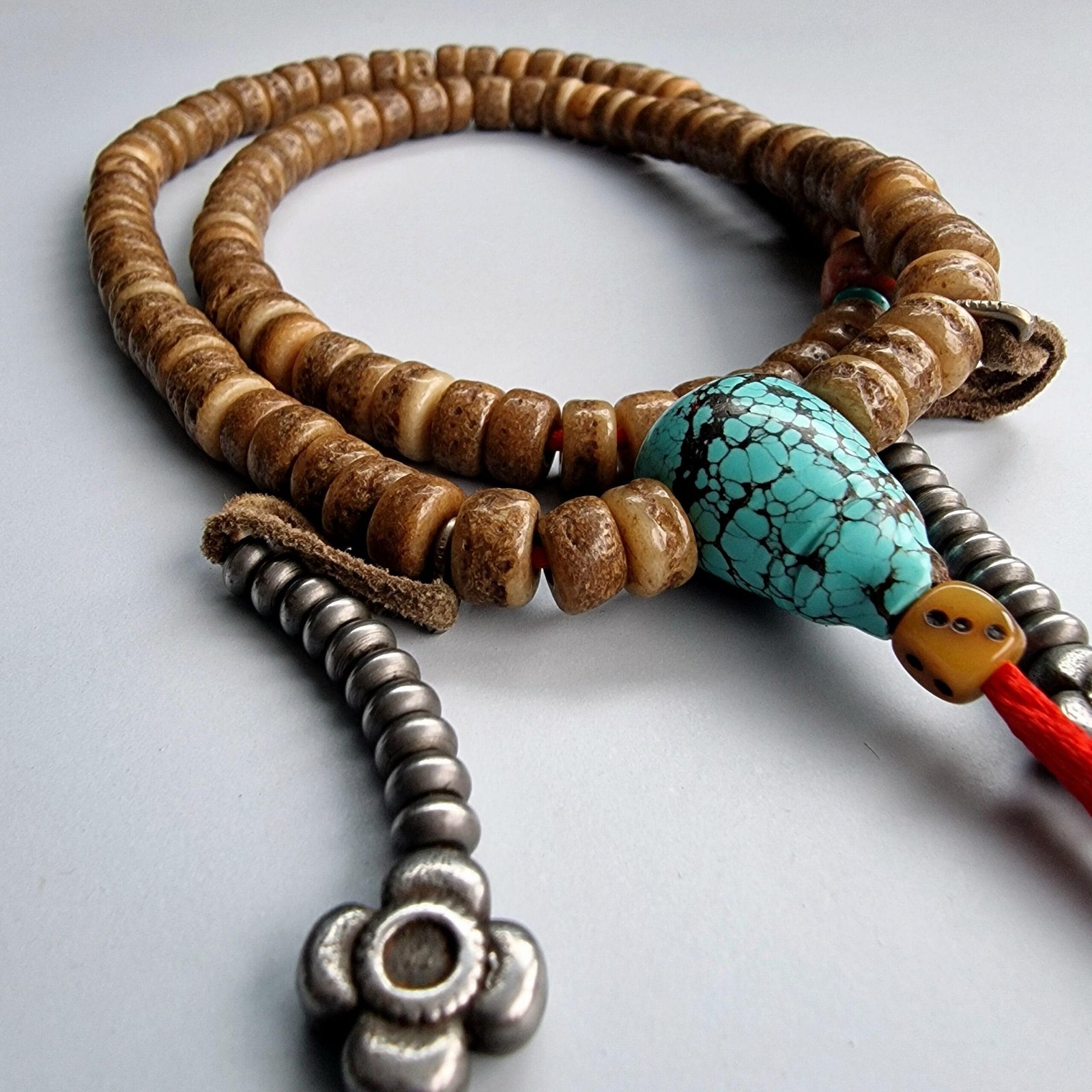
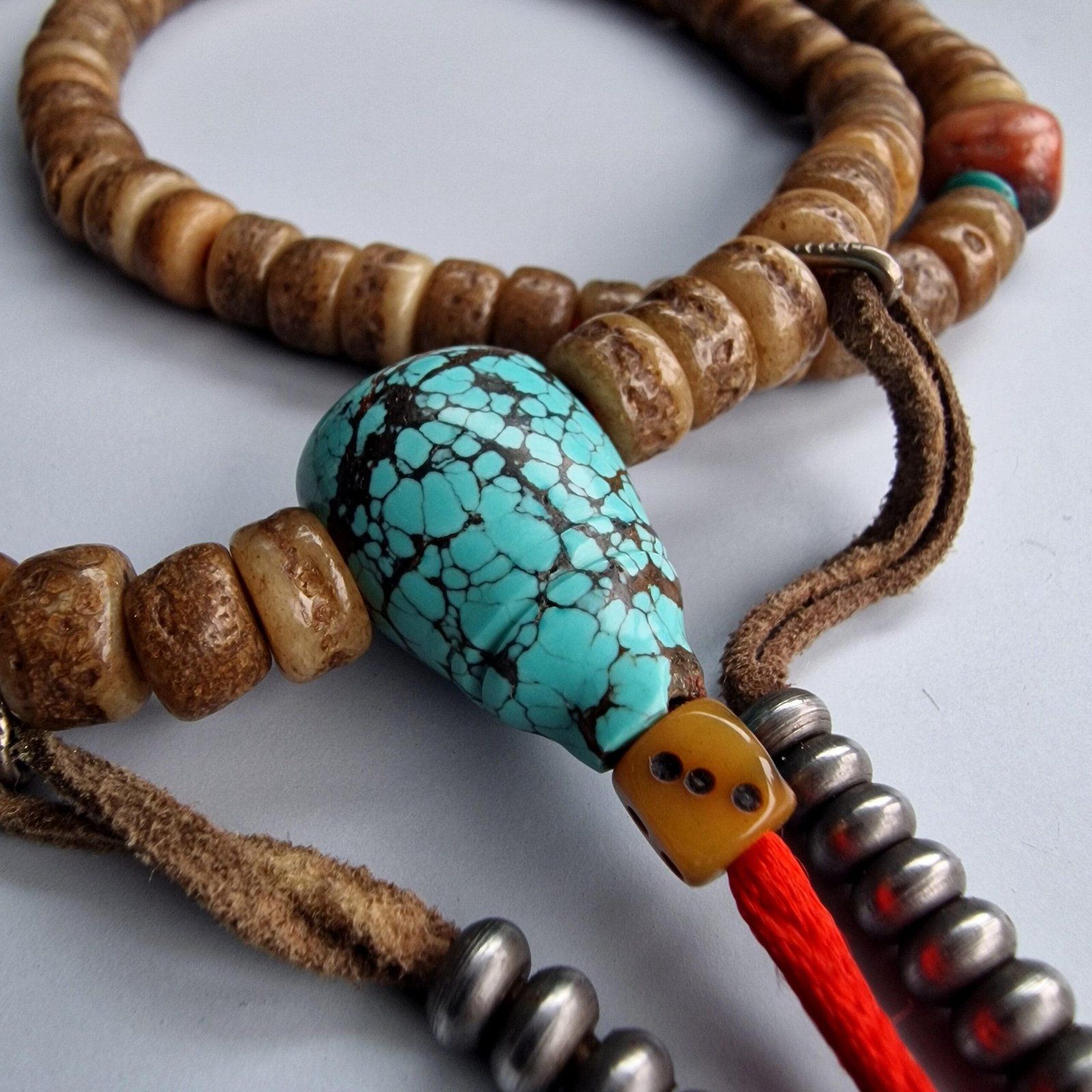
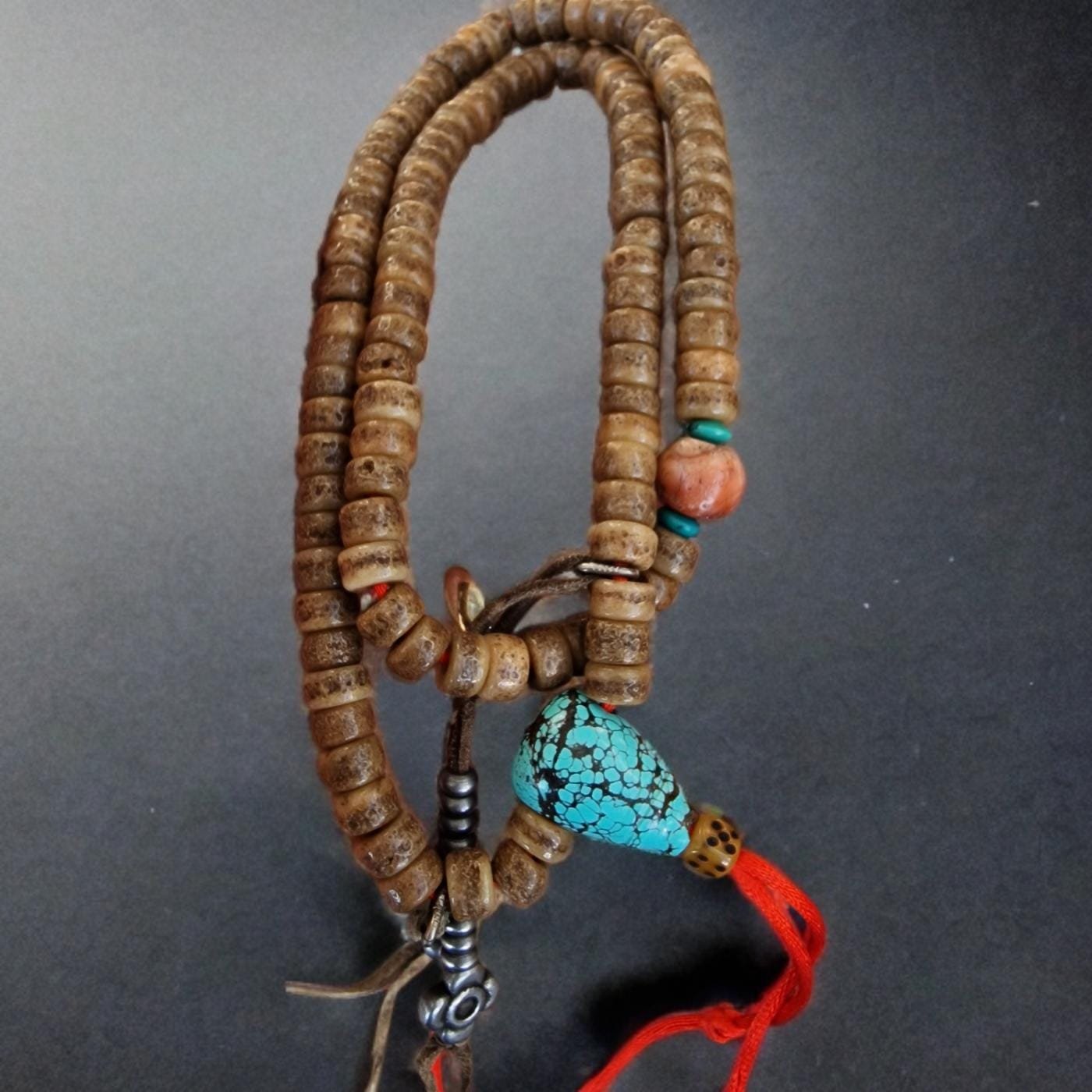
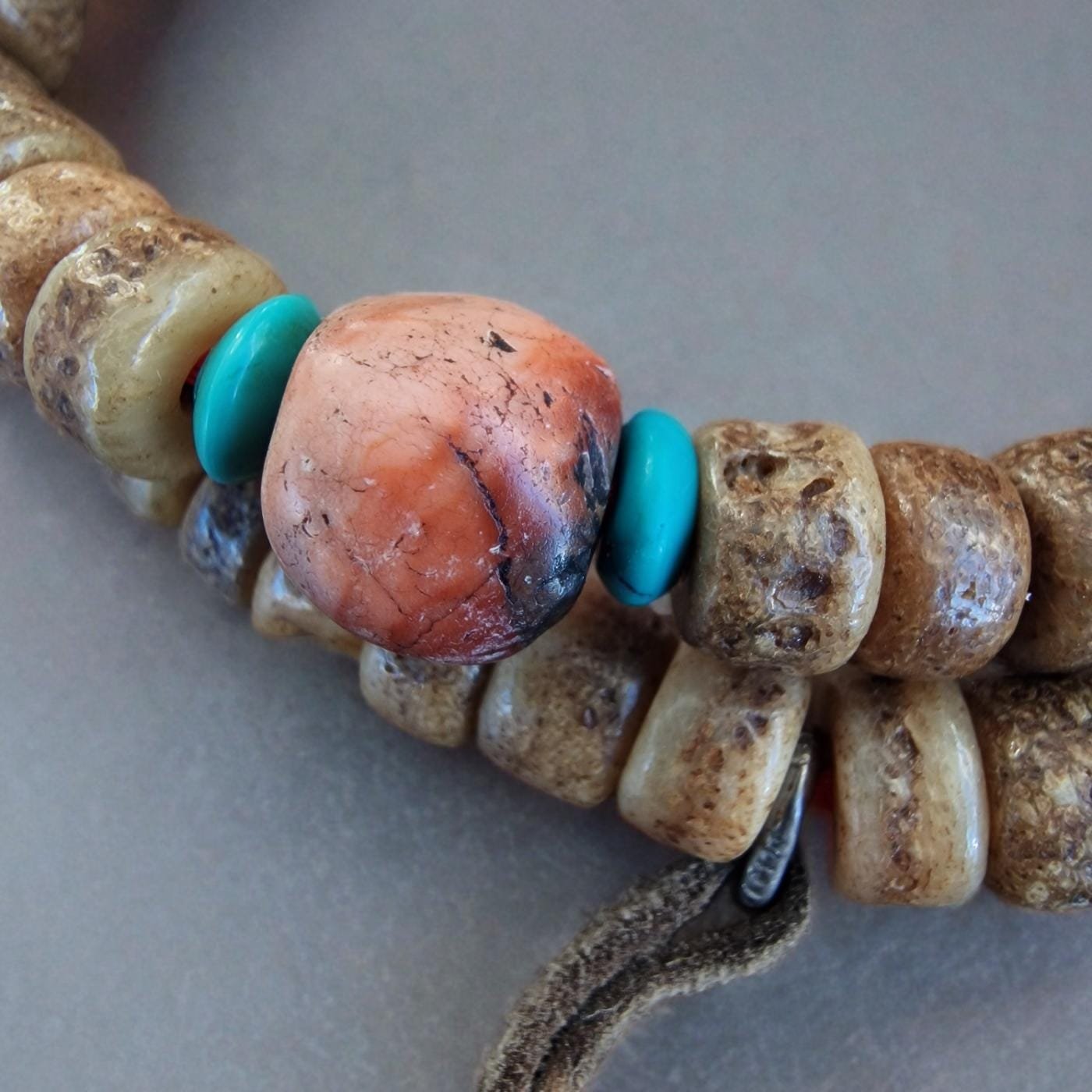
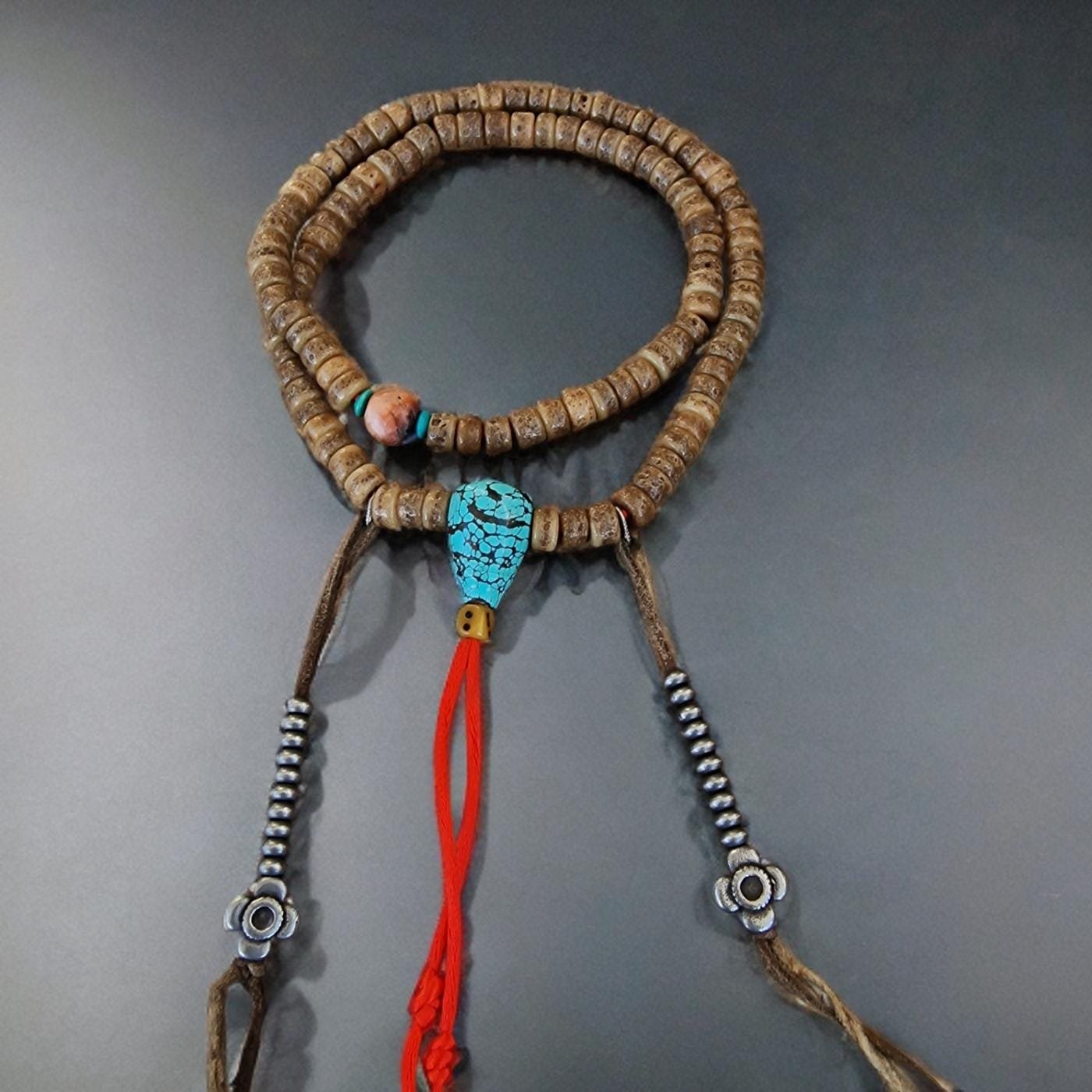
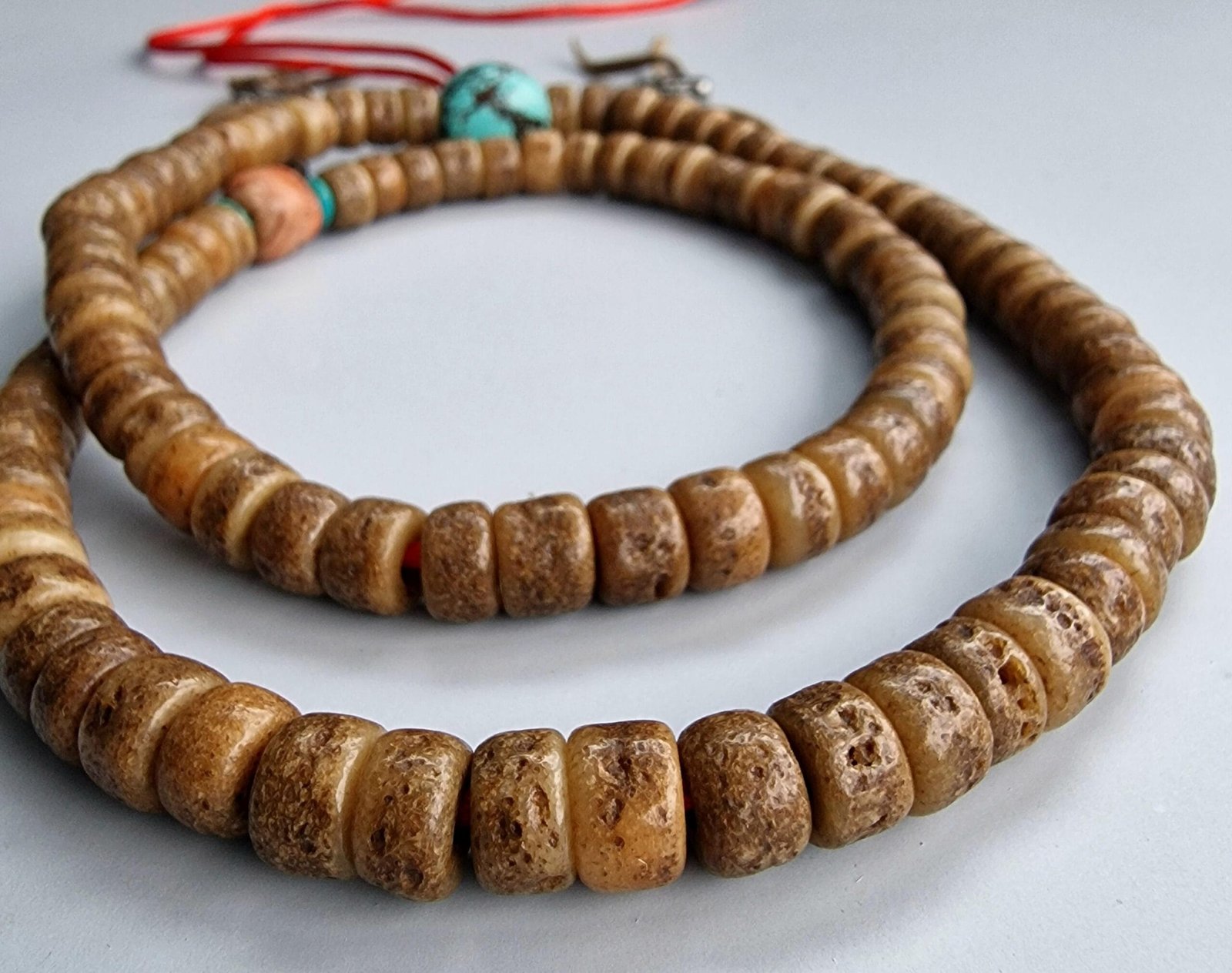
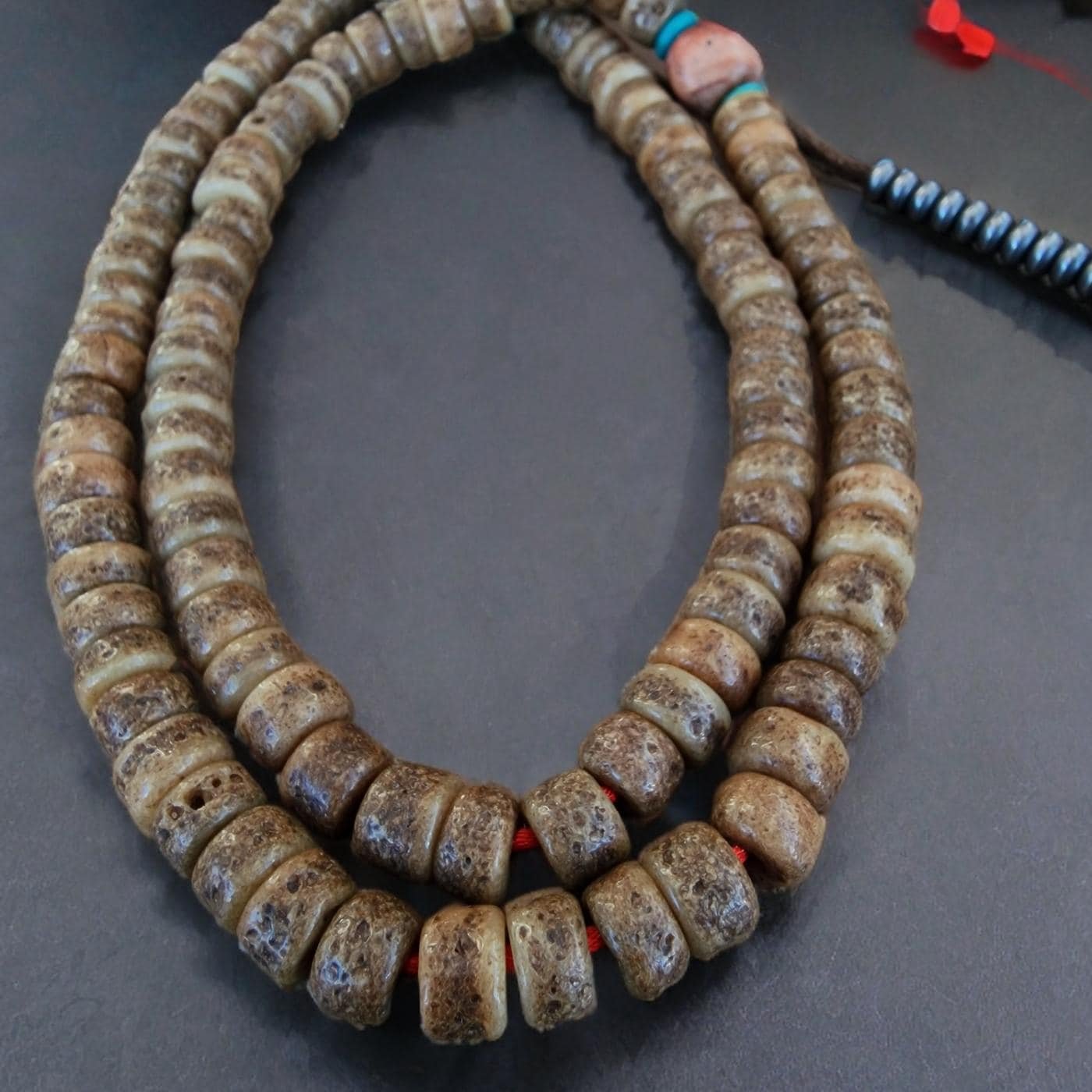
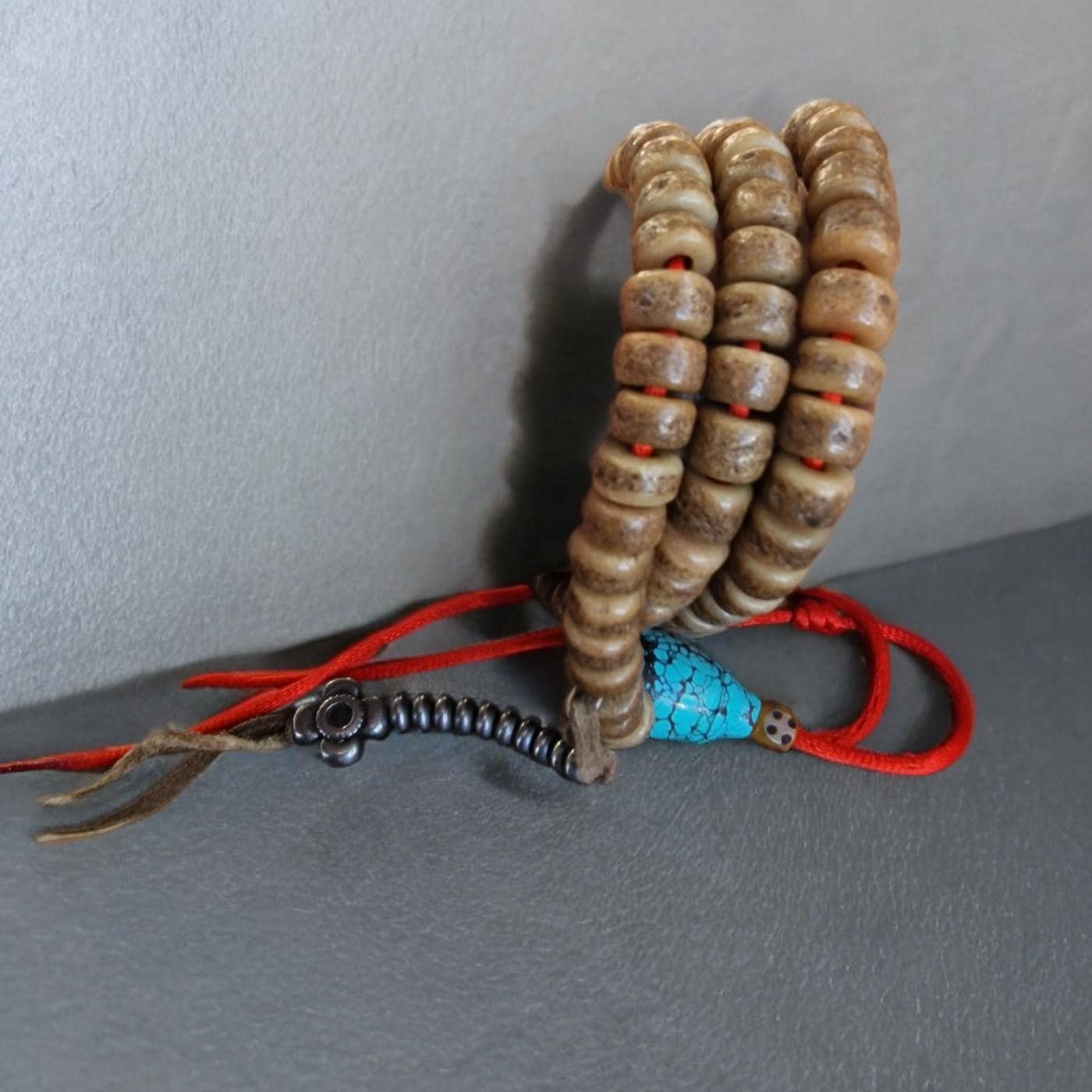
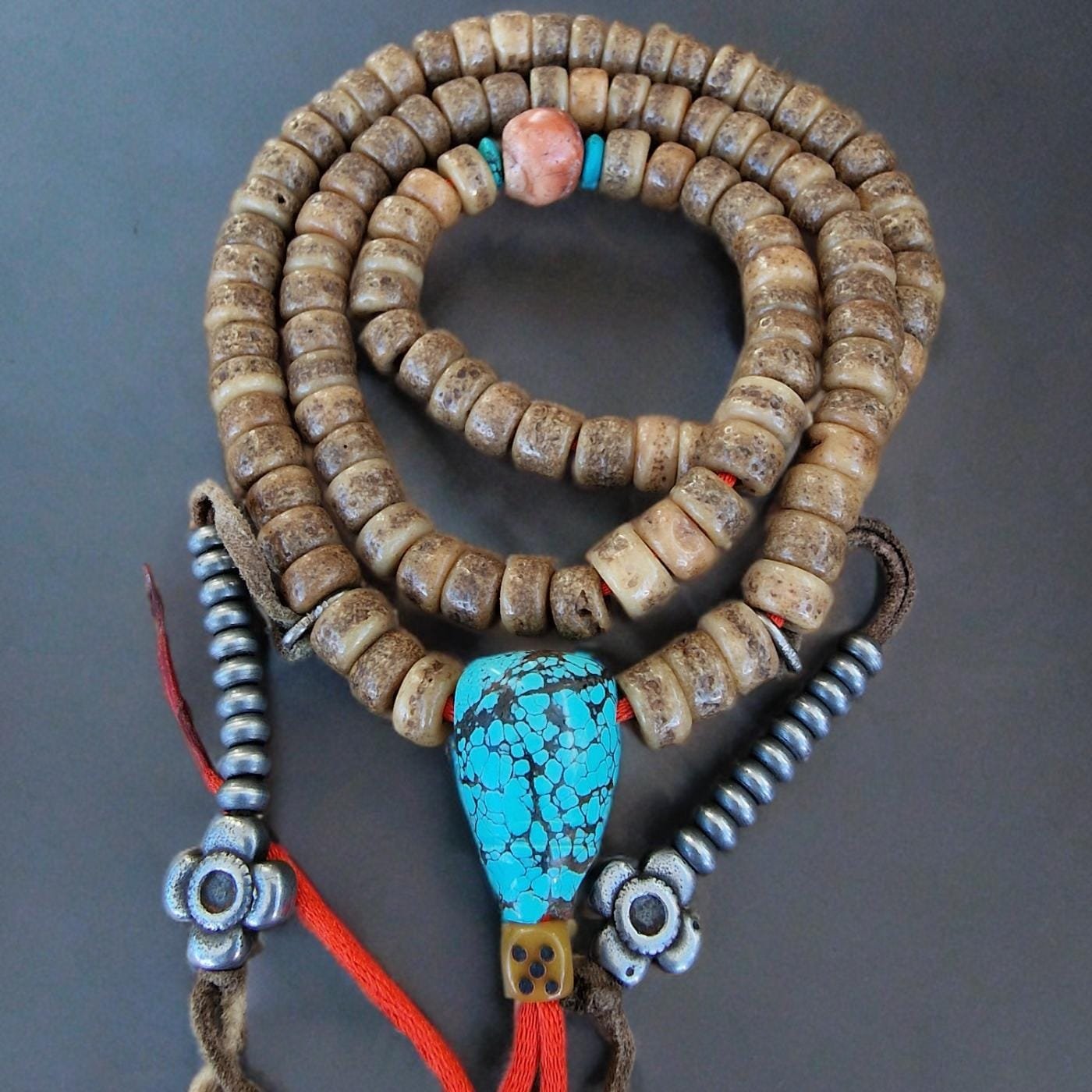
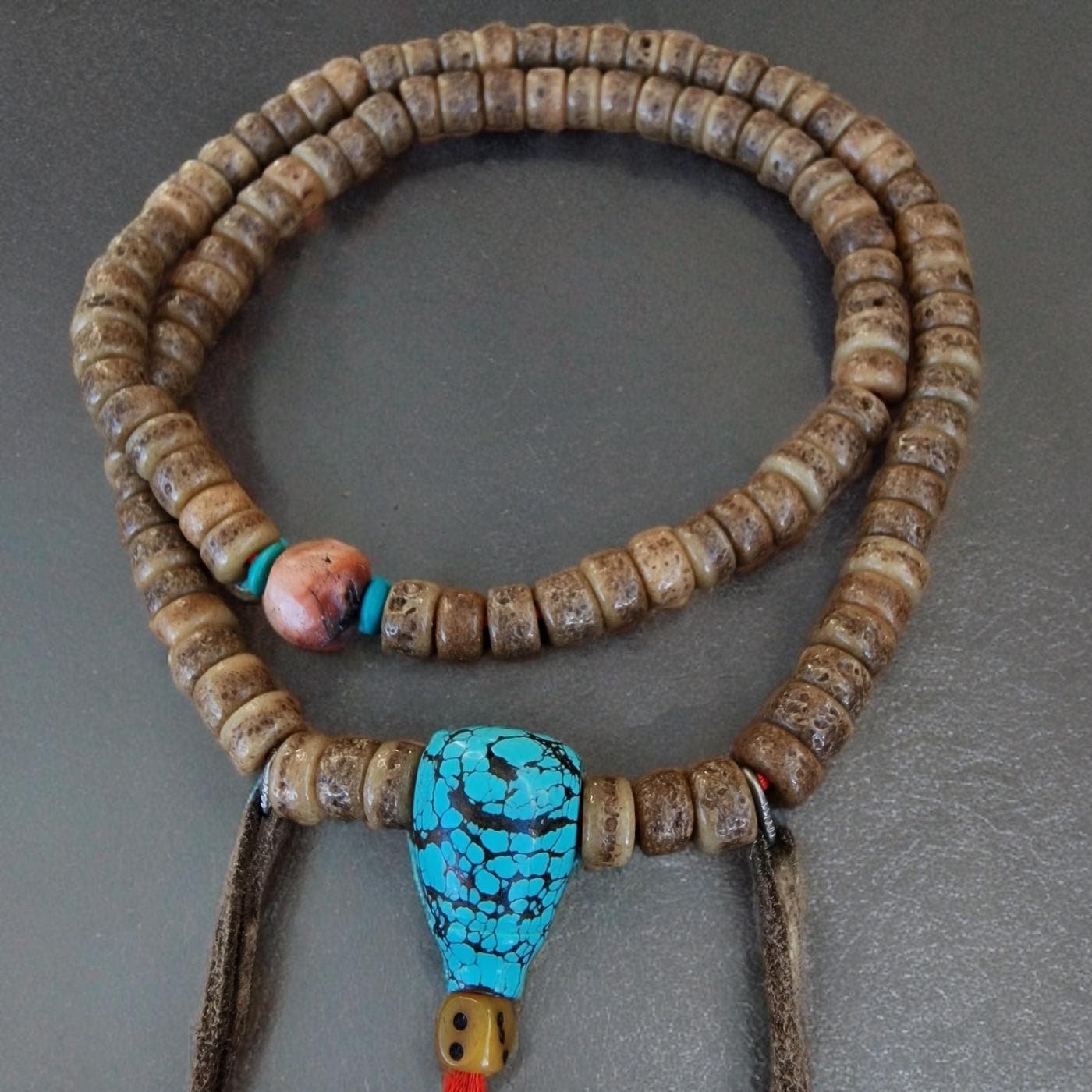
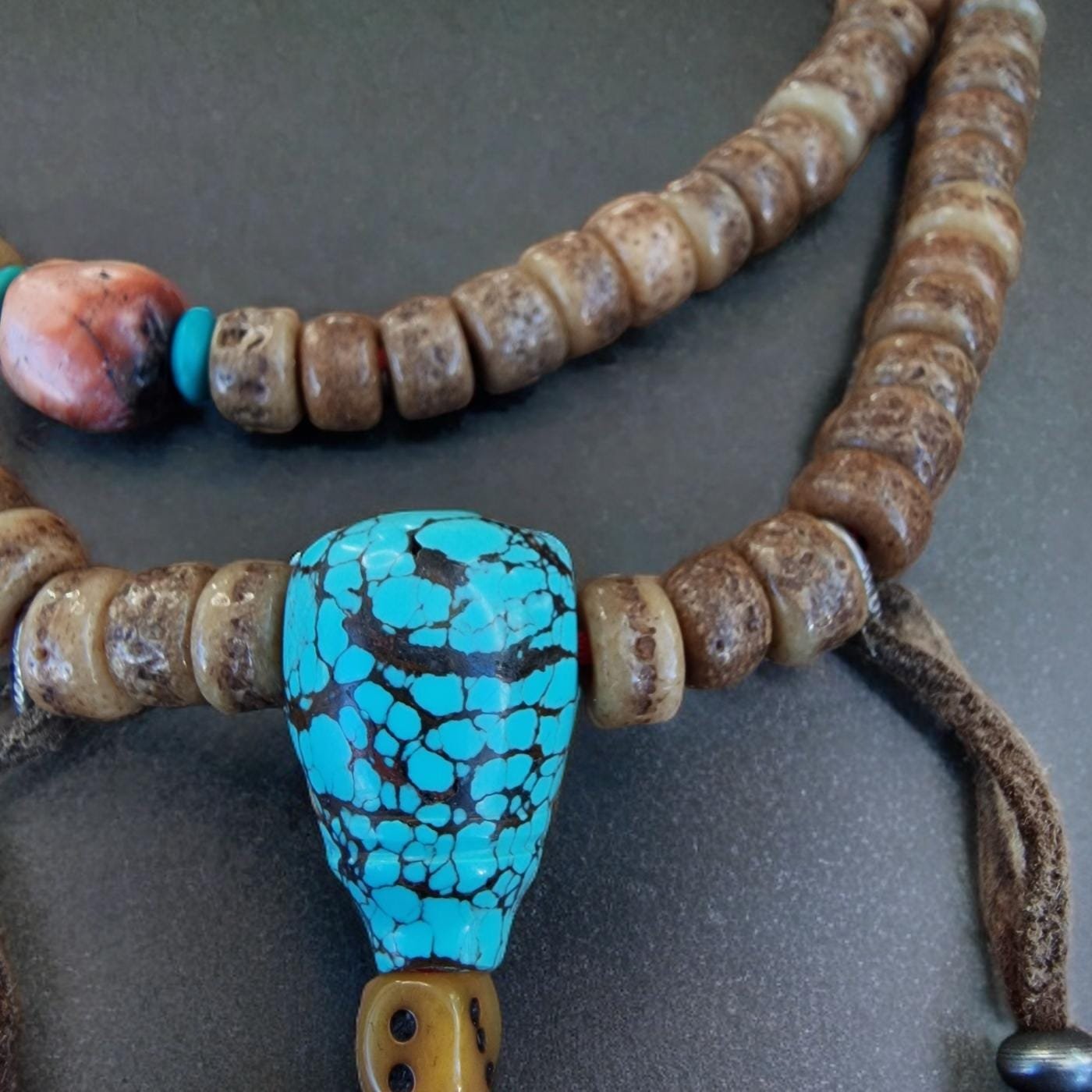
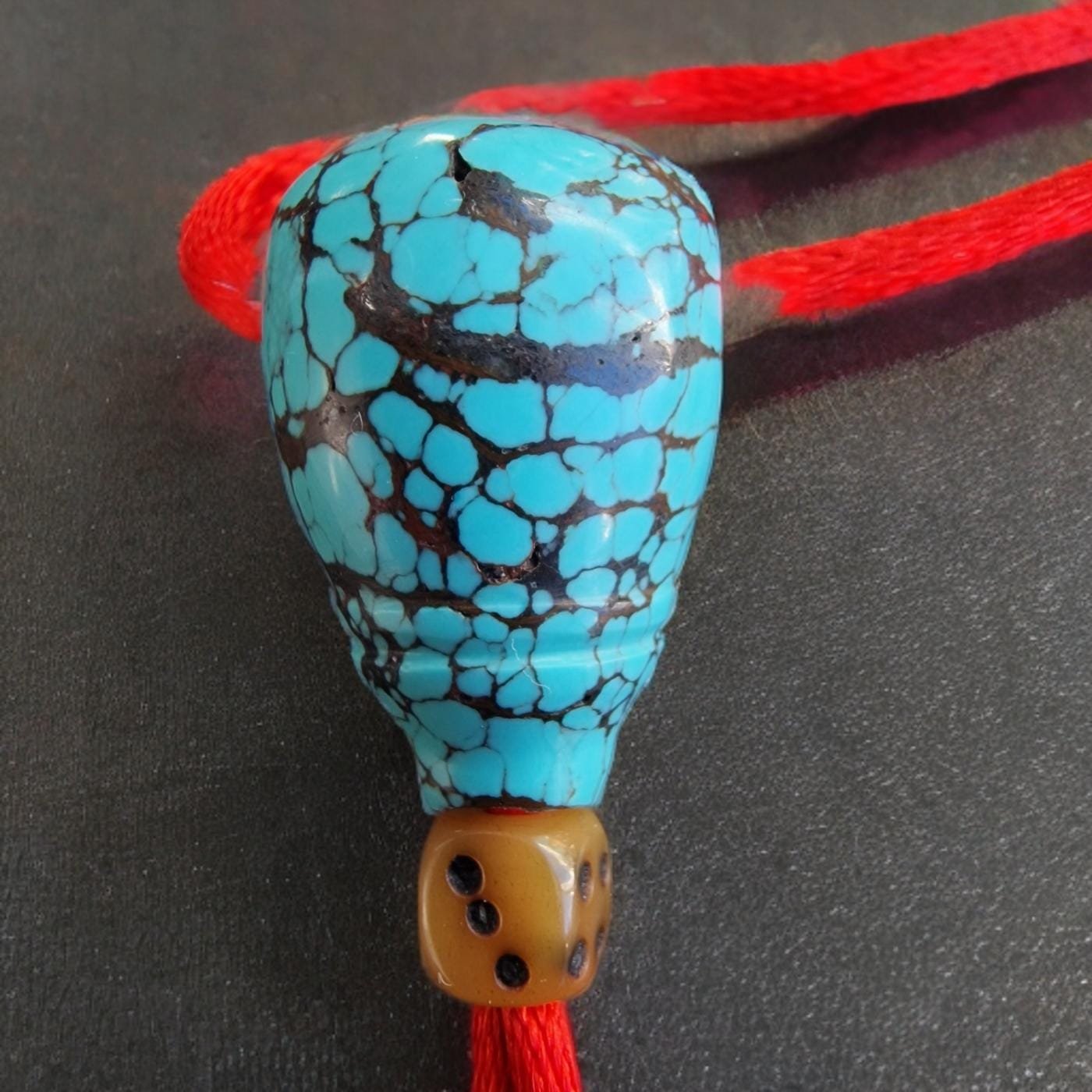
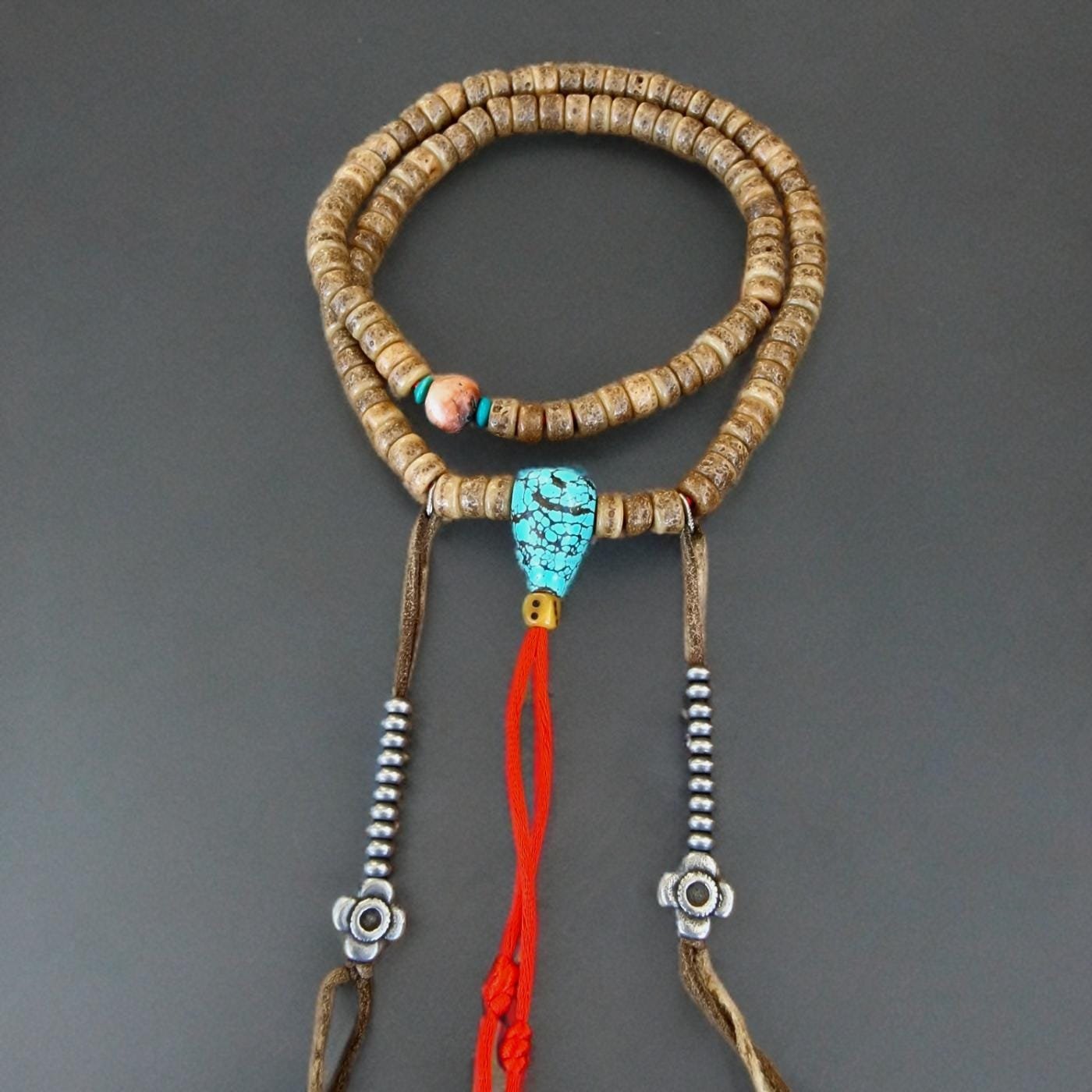
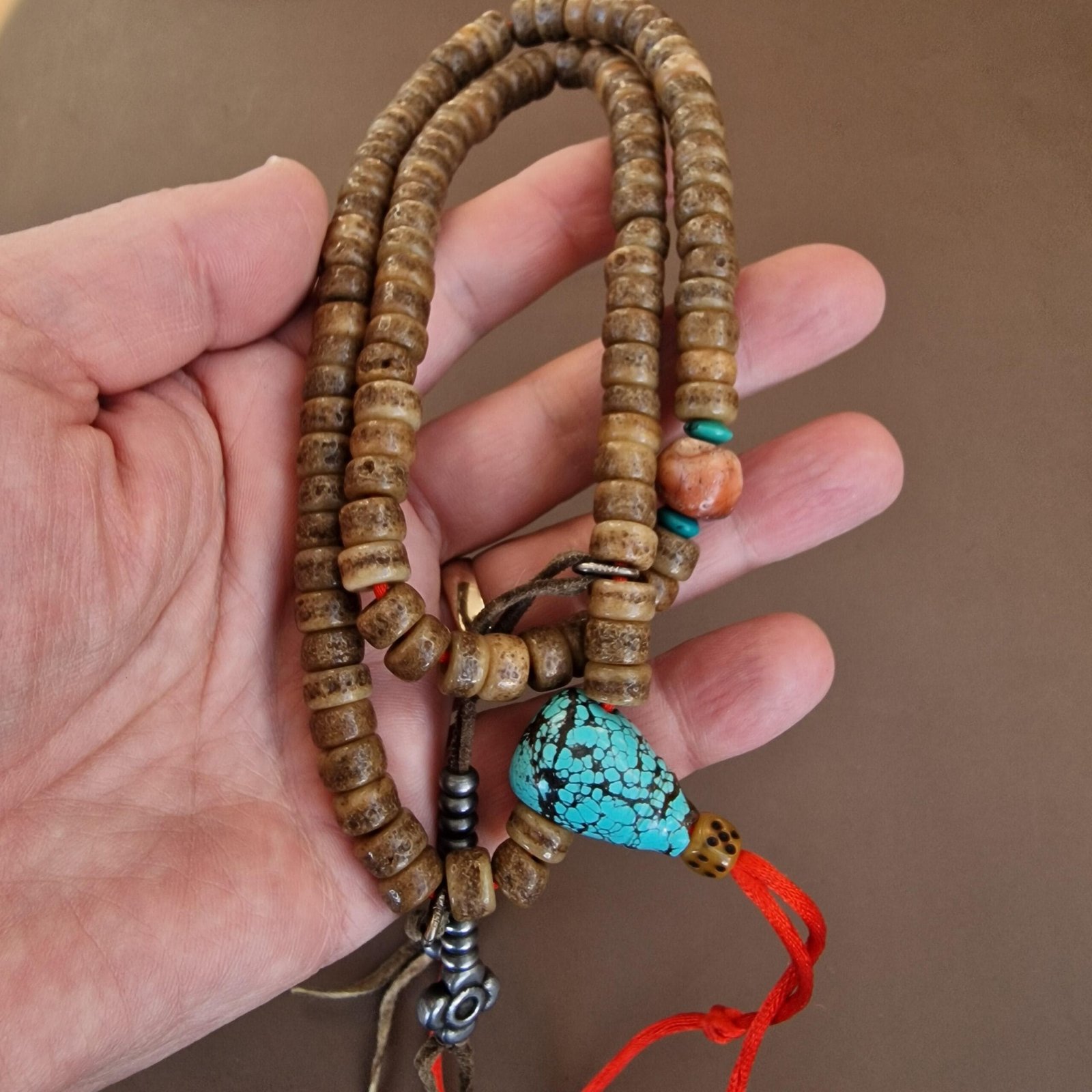

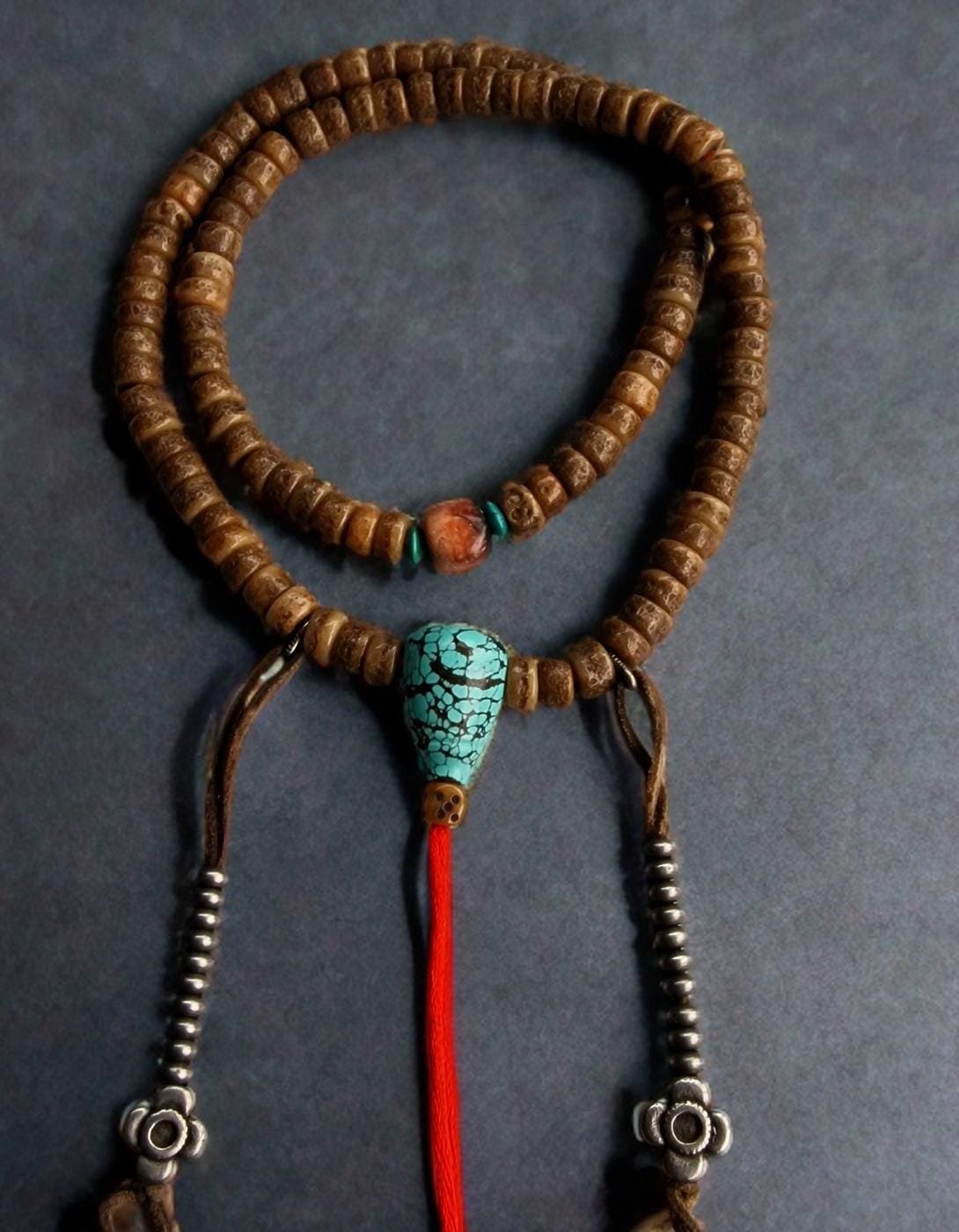




Kapala Prayer Beads Mala with Ancient agate Turquoise Guru and counters (108 Beads)
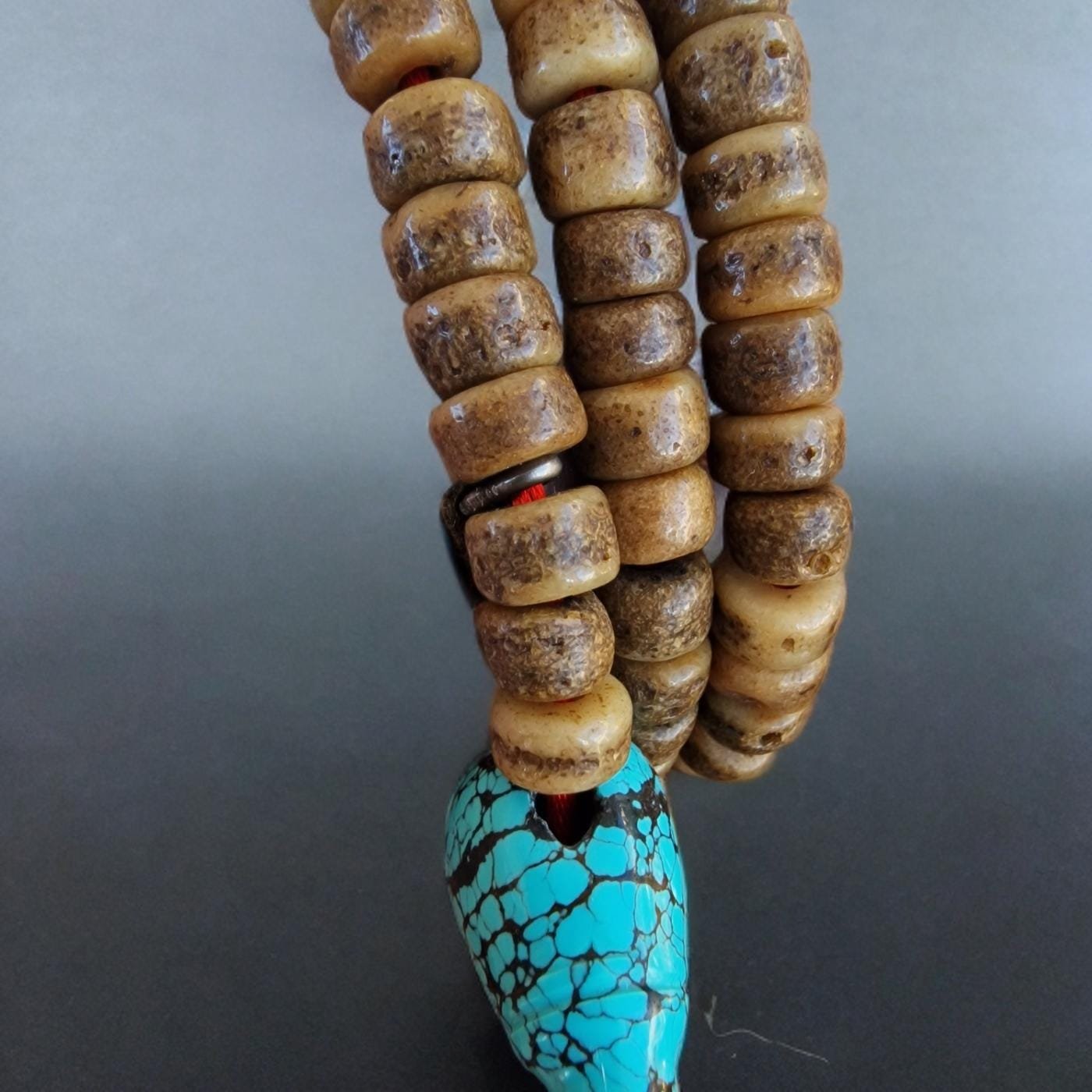
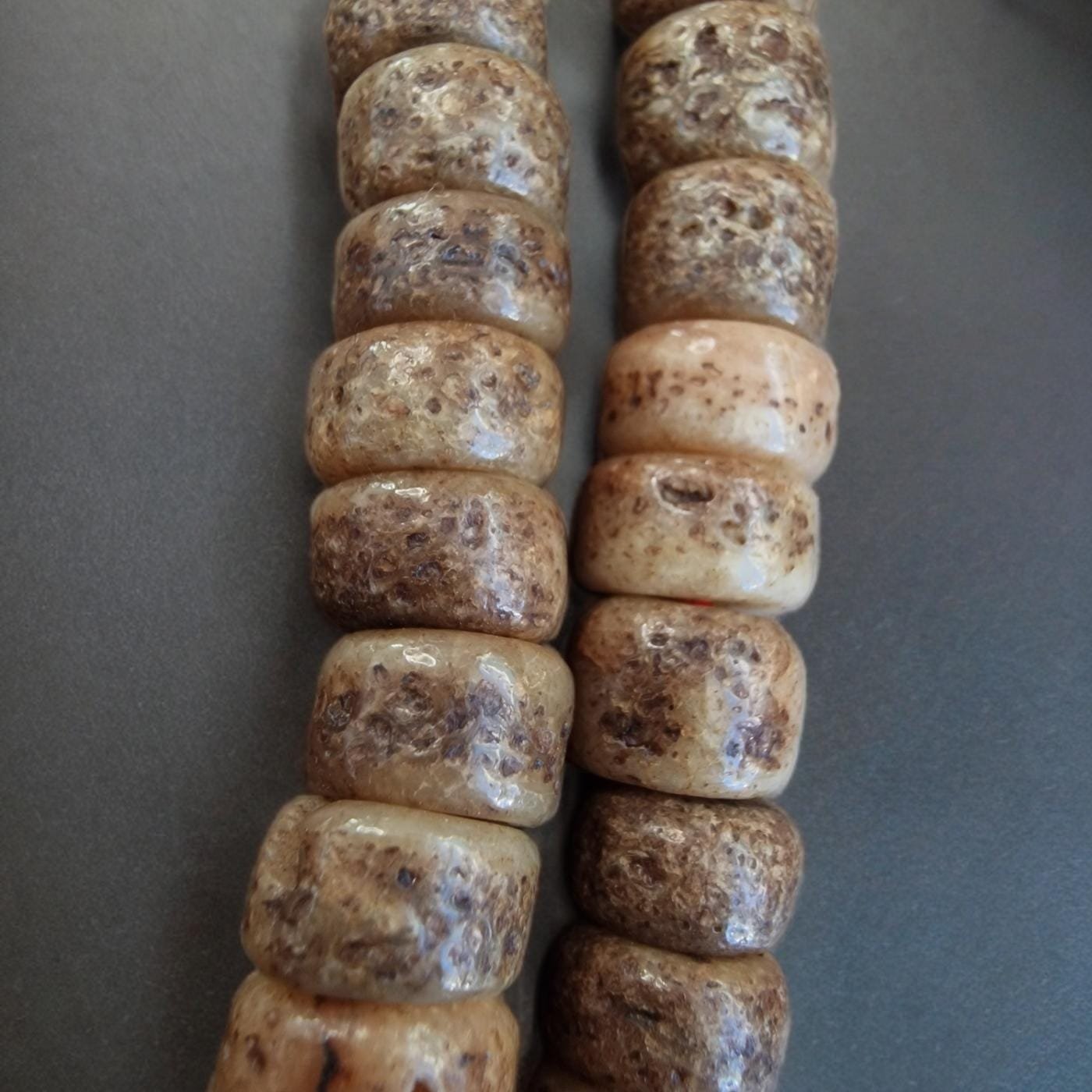
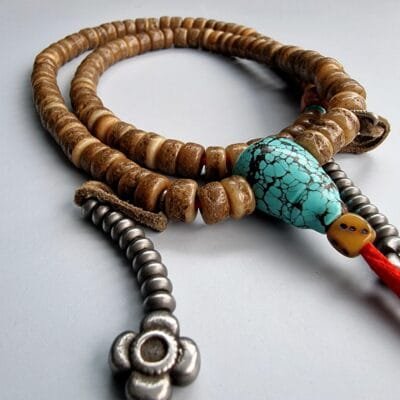
An early 20th-century Kapala prayer beads mala, traditionally made from H skull bone, used in advanced Tibetan Buddhist practice. The material shows a deep, natural patina developed through long use in a dry Himalayan climate, with no holes or weakness to the structure.
Material Properties:
The beads are carved from kapala, a material traditionally used in Vajrayana practices to confront impermanence and ego, and to transform fear into awareness. Over time, skull bone develops a distinctive surface feel and warmth that cannot be replicated artificially. Sacred material from Tibetan Sky burial. Lama blessed
Shape & Form:
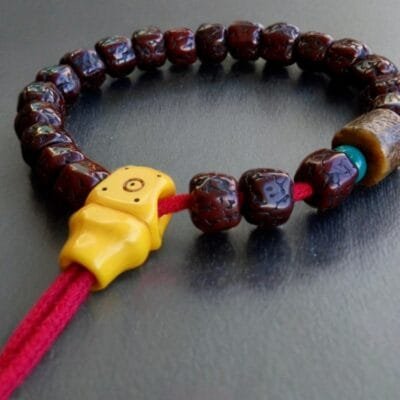
The mala consists of 108 beads, each approximately 8mm in diameter, with an intentionally irregular, organic shape. This natural inconsistency reflects hand shaping and prolonged ritual use rather than modern symmetry. The full length measures approximately 40 cm. The irregularity and soft edges are consistent with age and devotional handling.
Use & Condition:
Clearly used and worn through prayer, the beads show a great natural patina and a tactile, balanced weight. The surface is smooth from handling, with a strong presence and excellent feel in the hand. The mala has been preserved in a dry environment, contributing to its stable condition.
Origin:
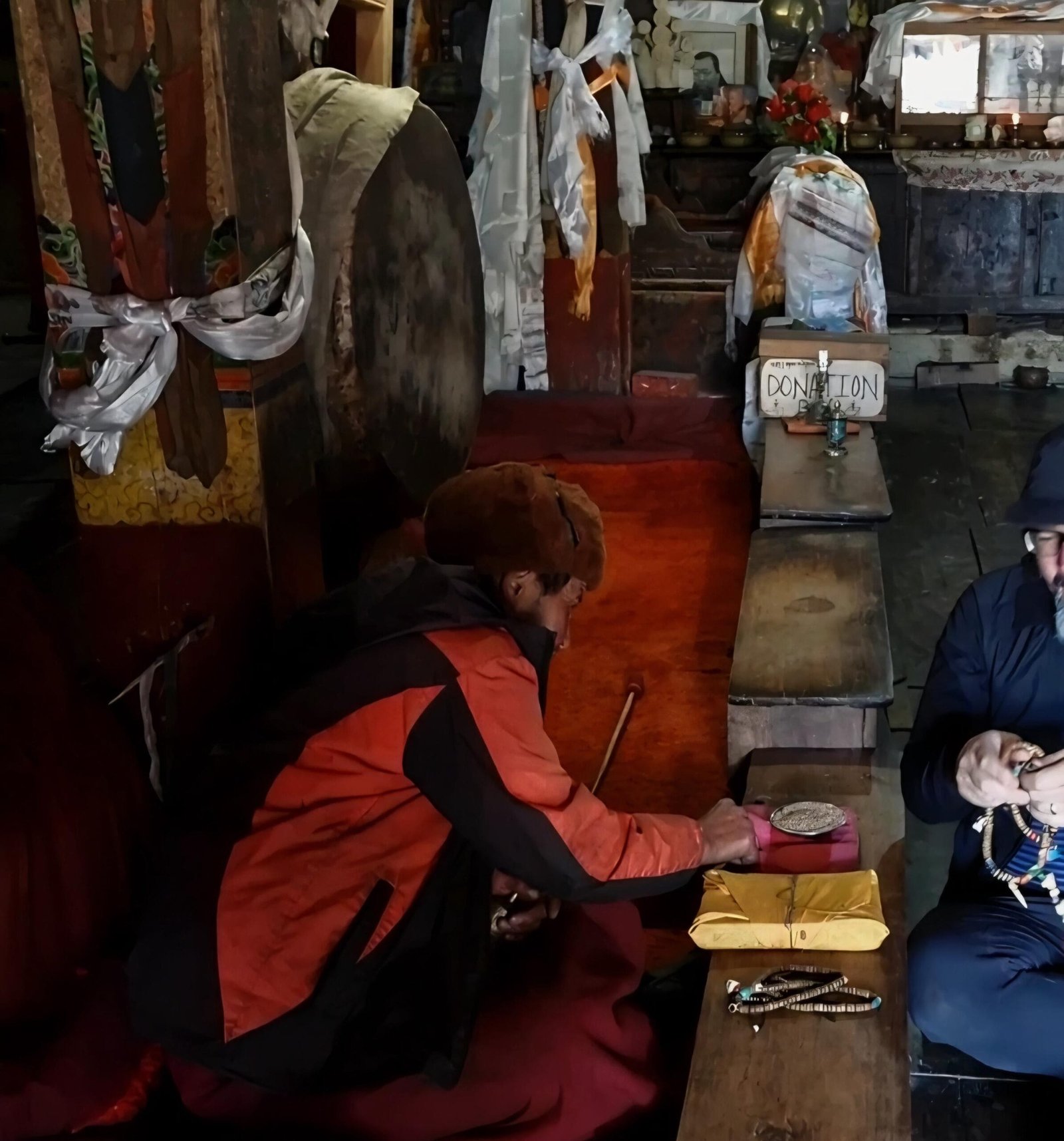
Collected in the Himalayas, Tibet, associated with sky burial tradition and esoteric ritual use.
Sky Burial (Jhator) – Context & Meaning
Sky burial, known in Tibetan as jhator (“giving alms to the birds”), is a traditional Himalayan funerary practice rooted in Vajrayana Buddhism. In this practice, the physical body is offered back to nature, most often to vultures, as an act of generosity and recognition of impermanence.
The body is understood as an empty vessel once consciousness has departed. Sky burial reflects the Buddhist view that form is transient, while awareness continues. Materials recovered after this process — including skull bone — were sometimes used by monks for ritual objects, not as relics of death, but as tools for awakening and considered a sacred continuation of practice.
Kapala – Material Properties & Traditional Understanding
Kapala refers to ritual objects made from H skull bone, used in advanced Vajrayana practice.
Material Properties:
Skull bone is lightweight yet resilient, developing a smooth, warm surface through prolonged handling. Over time, it acquires a natural patina that reflects age, climate, and devotional use. Bone responds uniquely to touch, making it especially suitable for tactile practices like mantra repetition.
Traditional Meaning:
Kapala material embodies the teaching of impermanence (anicca) and the emptiness of the ego-self. By using skull bone, practitioners directly confront attachment to form, fear of death, and personal identity — not intellectually, but experientially.
Kapala represents transformation: the transmutation of ignorance into wisdom.
Basic Use in Meditation & Practice
Kapala malas were traditionally used in:
Mantra recitation (japa), especially wrathful or transformative deities
Contemplation of impermanence
Practices aimed at cutting through ego-clinging and fear
During meditation, the tactile sensation of bone beads serves as a constant reminder of the teachings — grounding the practitioner in presence and awareness. The irregular shapes encourage attention rather than mechanical repetition.
Such malas were typically used by monks or serious lay practitioners, not casual devotees.
How This Relates to the Mala You Listed
In this mala:
The kapala material connects directly to sky burial tradition and Vajrayana impermanence teachings
The irregular bead shapes reflect hand carving and long devotional use
The patina and feel indicate prolonged handling in a dry Himalayan environment
Together, these elements point to an object made for practice, not display.

Reviews
There are no reviews yet.