Turquoise Mala
Summary
- Turquoise mala are traditional prayer beads made from turquoise stones, used for meditation and spiritual practices.
- They have historical significance in Tibetan and Himalayan cultures.
- Typically, a mala consists of 108 beads, sometimes with additional marker beads for counting prayers or mantras.
- Used for mindfulness, meditation, and ritual practices across Buddhist and Hindu traditions.

What is a Turquoise Mala
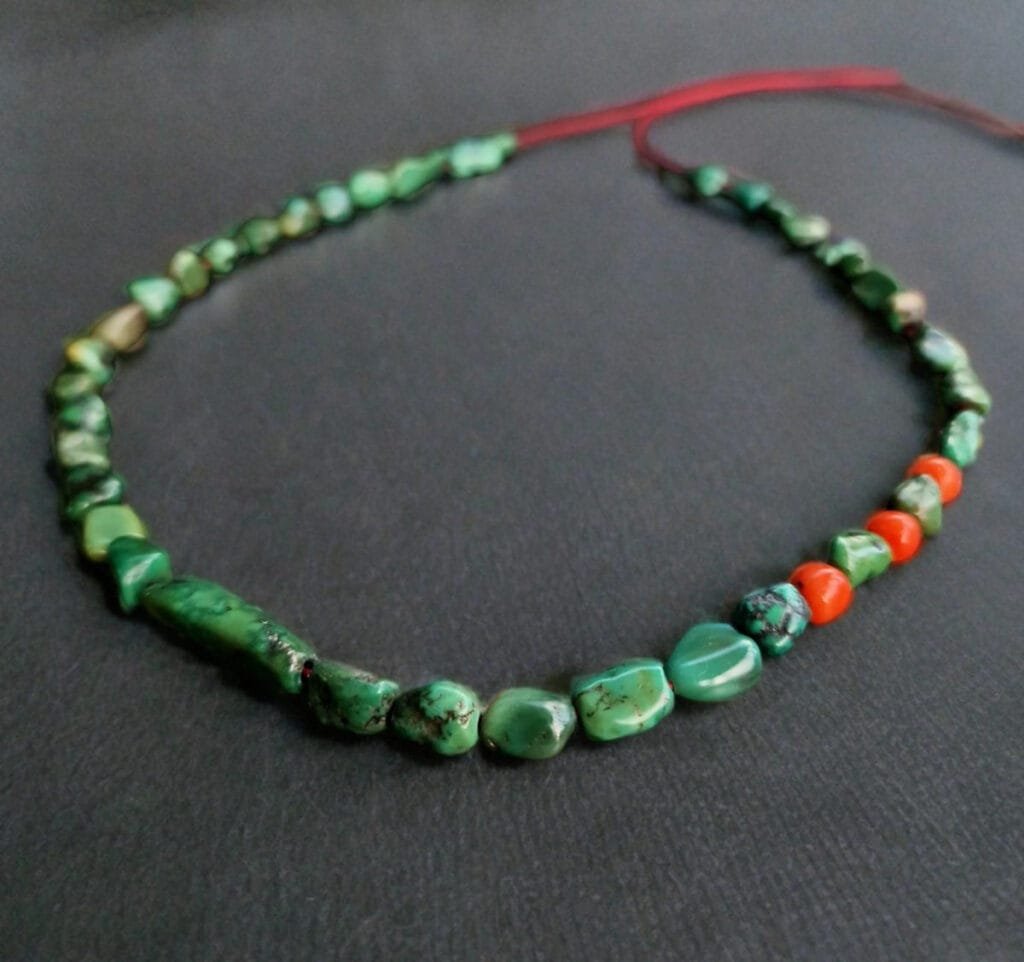
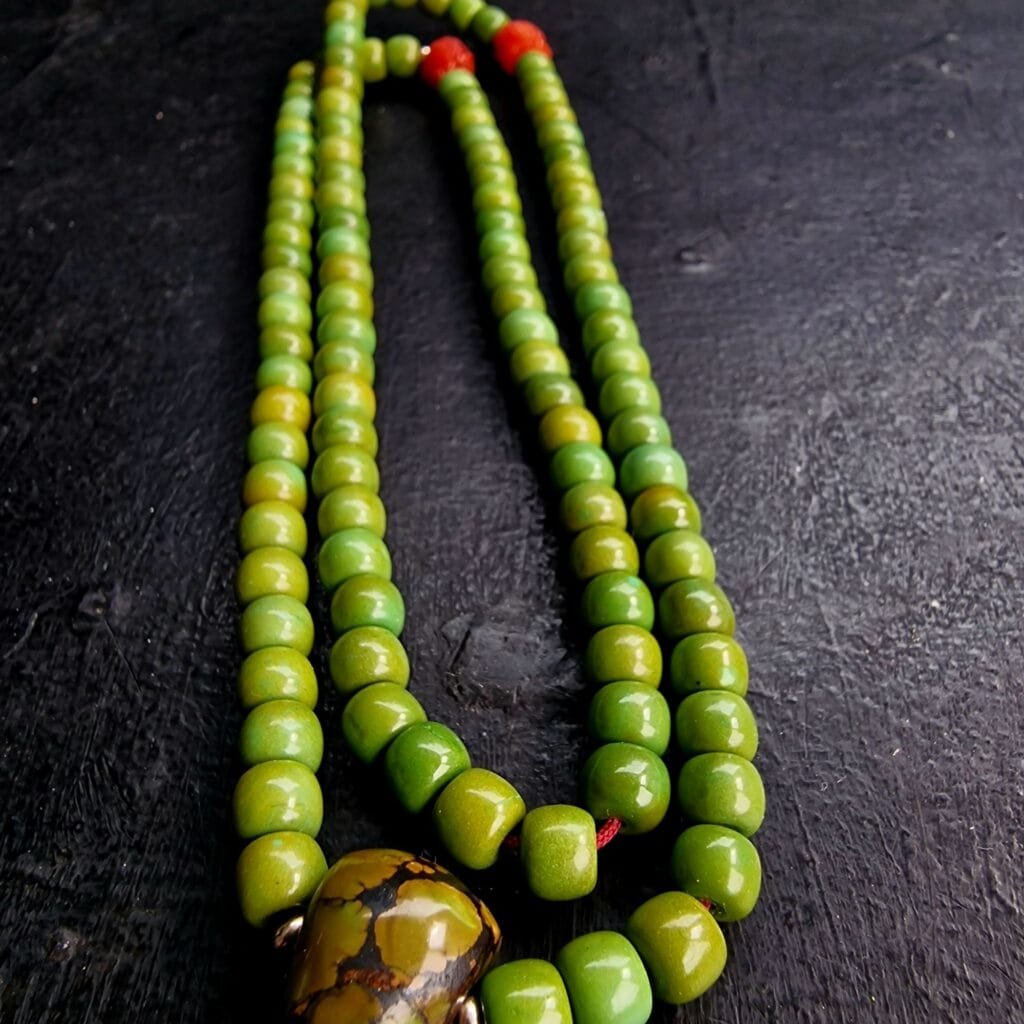
A Turquoise Mala is a string of prayer beads made primarily from turquoise, a blue-green mineral valued for its colour and cultural significance.
Key characteristics:
- Composed mainly of turquoise stones
- Standard mala length: 108 beads, with variations such as 27 or 54 beads
- Includes a guru bead or marker beads to aid in mantra counting
- Strung on durable thread or cord
Uses:
- Meditation and mindfulness practices
- Repetition of mantras or prayers
- Spiritual focus and grounding
👉Link: Mala Meditation Beads
Origins and Historical Context

Types and Variations
Turquoise mala can vary depending on the type of stone, craftsmanship, and intended use.
Common variations:
- Natural turquoise:Unaltered stones with natural veining
- Stabilized turquoise:Treated for durability and color consistency
- Mixed stone malas:Combined with other beads like coral or bone
Sizes and measurements:
- Standard 108 beads (approx. 6–8mm per bead)
- Shorter malas: 27 or 54 beads
- Adjustable cord length for different wrist or neck wear
👉Link: Tibetan Coral

How to Use a Turquoise Mala
Meditation and prayer practices:
- Hold the Mala in the right hand, draping it over the middle finger
- Use the thumb to count each bead while reciting a mantra
- Complete a full cycle of 108 beads for one meditation session
Other considerations:
- Can be worn as a necklace or bracelet for spiritual reminder
- Traditionally, avoid letting the mala touch the ground
- Cleanse periodically to maintain spiritual energy

Caring for a Turquoise Mala
- Store in a soft pouch to prevent scratches
- Avoid prolonged exposure to water or chemicals
- Clean with a soft, dry cloth to preserve natural stone quality

Related posts

Bodhi Seed:Origin & Use
December 29, 2025

Bodhi Mala
April 29, 2025

Kapala Mala Prayer Beads
September 26, 2024